

This article includes affiliate links. We may earn a commission if you make a purchase, with no extra cost to you.
Online dating already involves enough detective work. You examine profile photos, look for inconsistencies and quietly wonder if the person messaging you is actually who they claim to be. But should identifying fraudulent profiles really be left to daters?
Seeking.com doesn’t think so. The luxury dating site has introduced mandatory Selfie Liveness Verification for new members, using live images and AI to detect suspicious registrations before they reach other users.
Seeking says the technology has blocked more than 53,000 suspected scammers before they could send a message, contributing to a reported 90.3% reduction in fraud-related issues.
Now, the company is taking the unusual step of releasing images captured during attempted fraudulent registrations—and challenging the rest of the dating industry to do more.
- Every new member completes a live selfie check.
- Seeking says it has blocked 53,000+ suspected scammers.
- Fraud-related issues have reportedly fallen by 90.3%.
Romance Fraud Is Getting Harder to Spot
Romance scams rarely begin with an obvious request for money. They usually start with a convincing profile and what feels like a promising connection. The scammer builds trust before introducing an emergency, travel expense or investment opportunity. By the time money enters the conversation, the emotional relationship can feel very real.
In 2023, the Federal Trade Commission received 64,003 romance-scam reports, representing $1.14 billion in reported losses.
AI is making suspicious profiles even more convincing. The FBI has warned that criminals can use generative AI to create realistic images, false identities and persuasive messages. A polished profile photo is no longer proof that the person behind it exists.
Seeking Tries to Stop Them at Sign-Up
Every new Seeking member must complete a live selfie check during registration. AI confirms that a real person is present and then compares the live image with the photos uploaded to the profile.
This makes it harder for someone to create an account using stolen or fabricated images. If the faces do not match or the system detects signs of deception, the registration can be stopped before the person contacts another member.
The key difference is that verification isn’t an optional badge members can pursue later. It is part of the initial sign-up process.
See how Seeking uses mandatory live selfie checks to make fake identities harder to hide.
See How Seeking WorksWhy Seeking Is Showing Their Faces
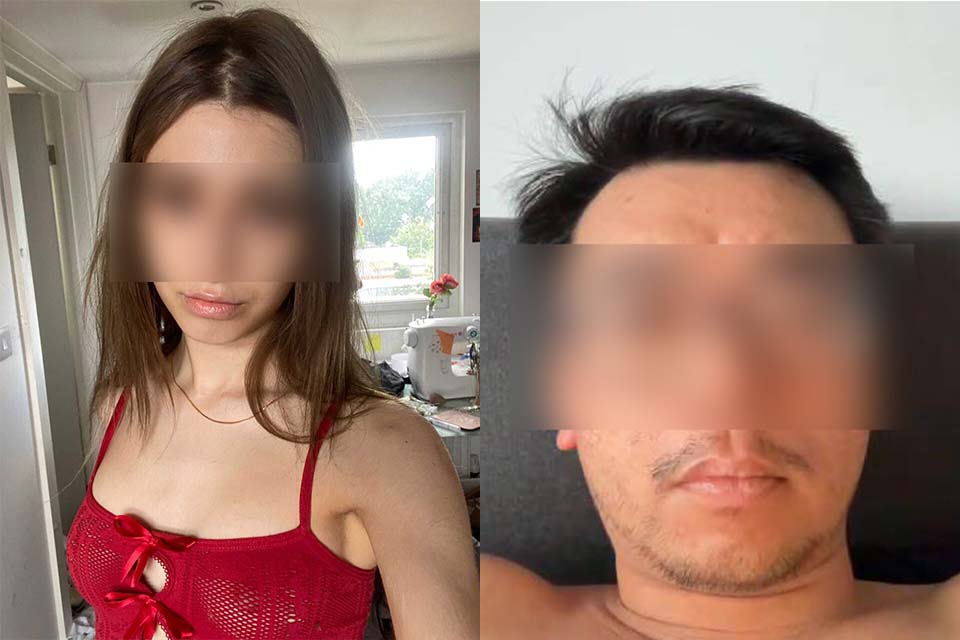
Dating fraud is usually discussed through statistics and anonymous warnings. Seeking wants people to see that there are real individuals attempting to operate behind fake profiles.
The company is releasing images captured during registrations flagged by its system. These images do not prove that every person pictured has been convicted of fraud, but they offer a rare look at the attempted accounts the platform is detecting.
“We talk about romance scams as statistics, but those statistics hide real victims, real pain, and real money lost,” said Brandon Wade, co-CEO of Seeking.
The campaign is also a challenge to other dating platforms. Seeking argues that preventative verification is possible when companies are willing to make it a priority.
Verification Doesn’t Replace Good Judgment
A live selfie can help confirm that someone resembles their profile photographs. It cannot guarantee that their intentions are honest. Daters should still be cautious if someone:
- Expresses intense feelings unusually quickly
- Tries to move conversations away from the platform
- Repeatedly avoids video calls or meeting in person
- Shares stories with changing details
- Requests money, cryptocurrency or financial information
The FBI advises never sending money to someone you have only communicated with online or by phone.
No dating platform can remove every risk. But there is a meaningful difference between telling users to watch for scammers and actively trying to stop suspicious accounts before they can make contact.
Seeking’s reported results suggest that live verification can make fake identities considerably harder to maintain. For daters, that could mean less time investigating profiles and more confidence that the person on the other side of the screen is at least the person in the pictures.
Discover the dating site using live selfie checks to stop suspicious profiles before they can make contact.
Explore SeekingHow does Seeking’s Selfie Liveness Check work?
Every new member provides a live image during registration. AI first confirms that a live face is present and then compares a snapshot with the photographs uploaded to the member’s profile.
How is Selfie Liveness different from regular verification?
Similar verification tools may be optional on other dating platforms. Seeking makes its Selfie Liveness Check mandatory for new members, allowing suspicious registrations to be identified before they enter the site or contact another user.
How many suspected scammers has Seeking blocked?
Seeking reports that it has blocked more than 53,000 suspected scammers before they could contact members. The company also reports a 90.3% reduction in fraud-related issues following the introduction of its verification system.
How does Seeking balance verification with privacy?
Seeking says selfie data is encrypted during storage and transfer. Facial geometry is held securely through a third-party system, while access to raw selfie images is limited to authorized personnel for verification, policy enforcement and identifying potentially fraudulent accounts.
How many potential victims has the system protected?
Seeking cannot provide an exact number because flagged accounts are stopped before they interact with members. This means the platform does not know who those accounts might have contacted or targeted if they had successfully registered.
Does verification guarantee that every member is trustworthy?
No verification system can guarantee someone’s intentions. A live selfie check can make stolen photographs and fabricated identities harder to use, but members should still avoid sending money or sharing financial information with someone they have only met online.