

If you live in Iowa or anywhere in the agricultural Midwest, there’s a good chance your tap water contains contaminants that standard filters can’t remove. According to a CNN report published this April, over 62 million Americans – roughly 1 in 5 – may be exposed to elevated levels of nitrate in their tap water, largely driven by agricultural runoff.
For households concerned about nitrate exposure, a reverse osmosis system is one of the most effective at-home methods for reducing nitrates at the tap.
Keep reading to find out what the research says and how an RO system can help, or skip to:
- Is tap water already tested and regulated?
- What does the research say about nitrate exposure?
- Why don’t basic filters solve the problem?
- What should I look for in an RO system?
- Which RO system covers all of that?
- Final Thoughts
Is tap water already tested and regulated?
Yes, but the federal nitrate limit is based on decades-old public health guidance (from 1962), and a growing body of peer-reviewed research has linked long-term nitrate exposure with health risks at concentrations well below the current federal limit.
According to a report by the Iowa Environmental Council and The Harkin Institute, one study found a 200% increased risk of colorectal cancer among individuals consuming water with nitrate concentrations above 2.5 mg/L. This level still falls under the EPA’s current “safe” threshold. Among those with more than 10 years of exposure, that risk rose above 300%.
What does the research say about nitrate exposure?
Research has linked elevated nitrate exposure to several cancers (including colorectal, ovarian, bladder, thyroid, and prostate) as well as preterm birth and low birth weight. According to Des Moines University, prenatal nitrate exposure, even below the EPA’s regulatory threshold, does not appear to be risk-free for pregnant women.
Nitrates aren’t the only contaminant drawing attention. Public health experts also continue to study PFAS, synthetic “forever chemicals” that break down extremely slowly and have been detected in 94% of Iowa’s surface waters, according to the Iowa Environmental Council report. Findings link PFAS to kidney, testicular, prostate, and ovarian cancers. For many households, drinking water is the primary route of exposure.
Why don’t basic filters solve the problem?
Basic activated carbon pitcher filters can improve taste and reduce chlorine, but they are generally not designed to remove dissolved nitrates. Some filters may reduce certain PFAS, but performance varies by product and certification.
Reverse osmosis systems are widely recognized as the most effective at-home filtration method, shown to reliably capture dissolved contaminants by forcing water through a semipermeable membrane that removes up to 99% of them. CNN cites RO as the recommendation from water quality experts for consumers concerned about nitrate exposure.
What should I look for in an RO system?
Not all RO systems offer the same performance, transparency, or day-to-day usability. Here’s what actually matters:
- NSF/ANSI 58 certification. This is the most widely recognized independent testing standard for water treatment systems, covering performance, material safety, and structural integrity. Not every system carries it, so verify before buying
- Remineralization. RO filtration can reduce dissolved minerals along with unwanted contaminants. Systems that restore minerals after filtration produce better-tasting water and a more balanced pH.
- Water waste ratio. Some systems waste significantly more water than they purify. A 1:1 ratio (one gallon purified for every gallon of waste) is significantly more efficient than older RO designs.
- App-based monitoring. Real-time water quality and filter life tracking removes the guesswork from maintenance and lets you see how your system is actually performing.
- Fridge and ice maker compatibility. If your fridge connects to an unfiltered line, a tap filter only goes so far. A system that connects to both your tap and your fridge covers your drinking water and your ice.
Which RO system covers all of that?
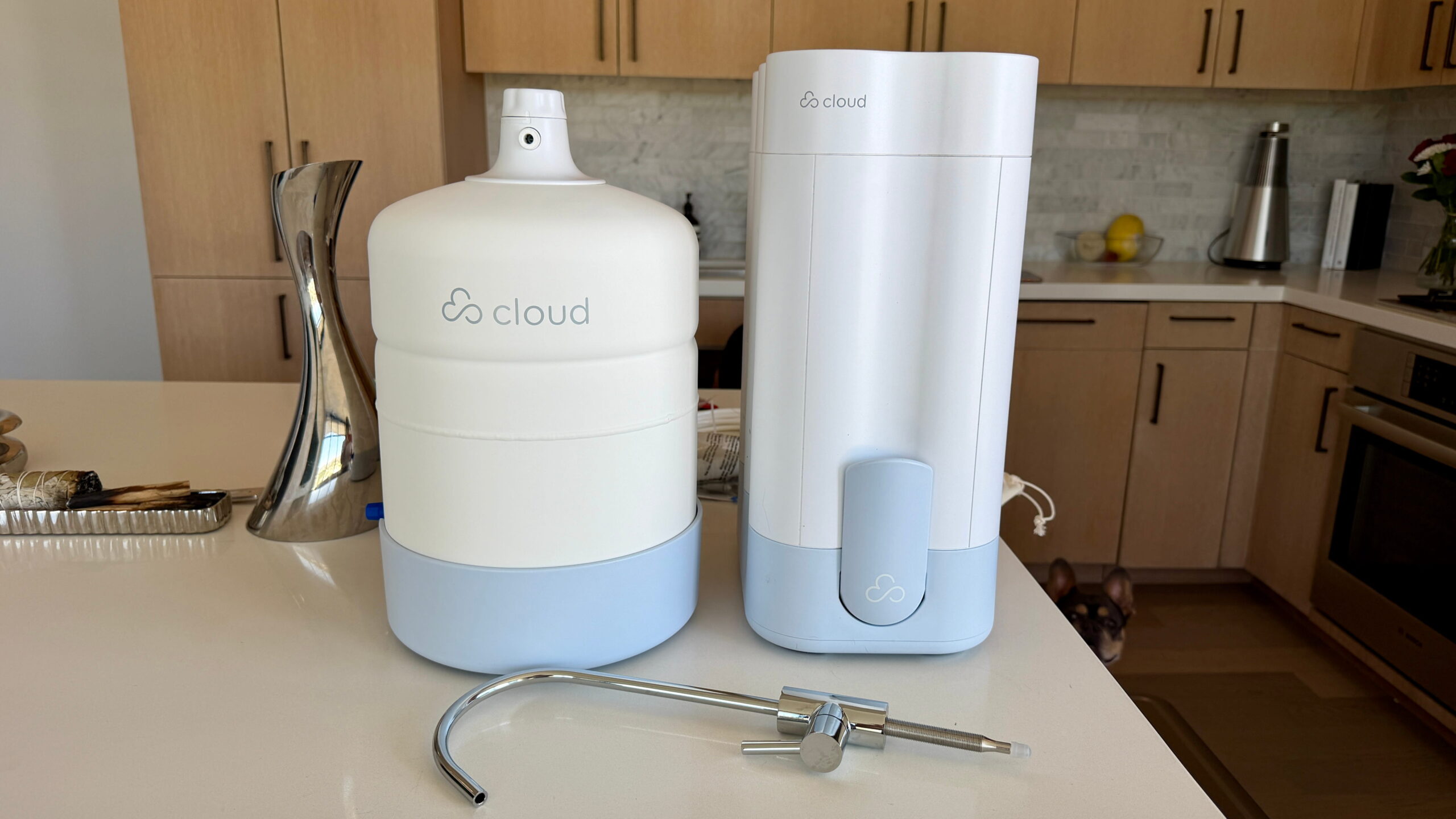
For households looking to reduce nitrate and PFAS exposure, one option that checks many of the boxes discussed above is Cloud RO.
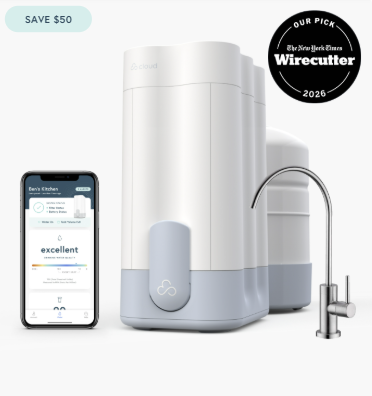
Cloud RO’s under-sink system is NSF/ANSI 58 certified, includes remineralization, offers a 1:1 wastewater ratio, connects to both your tap and fridge or ice maker, and provides app-based filter monitoring – so you always know exactly what you’re drinking. These are just some of the reasons the Cloud RO is Wirecutter’s #1-recommended RO system.
Final Thoughts
If you live in heavily agricultural states like Iowa, your tap water is likely carrying contaminants that outdated regulations weren’t designed to catch. While researchers continue to study the extent of these risks, reducing unnecessary exposure where possible is a practical next step for households.
As evidence continues to grow, an RO system is the most effective, evidence-backed step you can take to protect your household, and Cloud RO is one of the few that’s fully certified, tested, and built to be used long-term.
If you’re going to make one home upgrade this year, we’d recommend a reverse osmosis system like Cloud RO.
Check your zip code in the EWG Tap Water Database to see nitrate levels in your area.