
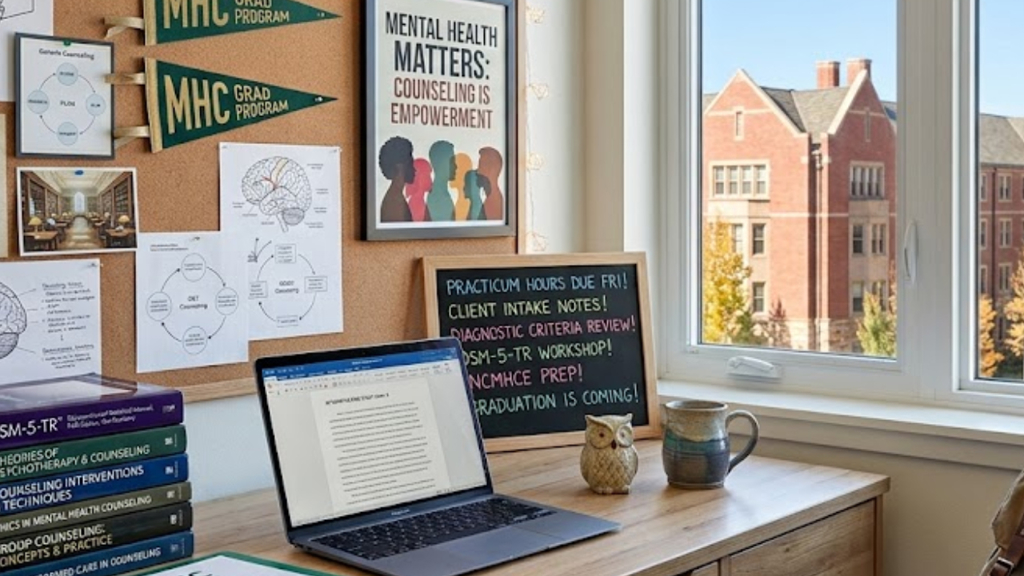
When thinking of a Master’s level mental health qualification in the US, the standard is a Master of Science (MS) or Master of Arts (MA) in Clinical Mental Health Counseling. This degree is a rigorous training program designed to equip students with all the knowledge and practical experience needed to become an ethical and effective career practitioner.
This article will give an overview of the topics studied, the course formats and options available and the current career prospects and trajectories for mental health counseling graduates across the US. This is what you need to know about mental health counseling masters in 2026.
What a Masters in Mental Health Counseling Is – And Who It’s For
A Masters in Mental Health Counseling degree prepares students to become licensed professional counselors. Although a useful degree in and of itself, which does have employability in many related fields, those wishing to become an independent counseling practitioner (in many states) will need to go onto a post-graduate licensing exam and qualification.
The degree usually takes two to three years of study, including a mandatory practicum segment involving internship experience in real-world environments.
Areas of study are varied, and can include specializations in second and third years. However, they commonly include:
- Counseling ethics
- Crisis intervention
- Group counseling
- Psychopathology
- Counseling theory
Study will be a mix of observed class discussion and learning, independent research and coursework and practical, guided placements.
While an early career Mental Health Counseling professional earns well above the average US salary, starting salaries aren’t among the most lucrative job positions in the economy. However, most people going into the field will be aware of this. The big appeal of the profession is that it is not only financially rewarding, but also holistically and mentally fulfilling.
A mental health counseling masters suits the kind of person who is resilient and personable, while being an active listener and problem solver. For these people the degree can, after a lot of hard work, offer the route into a career where you can change people’s lives for the better.
Different Modes of Flexible Study
Studying for this kind of degree has traditionally been full time and campus based. But in recent years that has been changing fast. Part time study is increasingly common. Although this does extend the length of degree it also allows for flexibility in study.
For another example, in 2026 studying for mental health counseling masters programs online is not only viable but a common option. Lectures can be live or asynchronous, meaning students have the option to complete their degree around a working professional life or family commitments.
Online doesn’t mean entirely remote though. Especially in Mental Health Counseling masters where clinical placements are a required part of the degree – but these practicums can be arranged in an approved local setting near to the student.
Why Demand Is Currently Strong and Where Trends are Headed
Around 450,000 mental health counseling professionals are currently employed in the US. The Bureau of Labor Statistics says this number is expected to grow 15% over the next decade, which is much faster than the average of most professions.
So why are mental health counselors in such demand – and what are the average salaries?
Well, depending on post graduate qualifications (if needed in your state) salaries can start at around $50,000 per annum and go up to $65,000 for newly-qualified roles. The most experienced practitioners, later in their careers, can earn up to $80,000 a year.
The highest earning roles are often outside of direct practice and include policy, management and consulting.
As for demand, rising awareness of mental health needs among local government, business and the charitable sector has been a big contributor. The opioid crisis has also spiked demand for addiction and rehab specialists, while local governments are often increasing spending on youth mental health services.
Career Options and Progression
Post degree, most students will have to decide if they want to complete the extra (and arguably more intense) postgraduate qualification that is required for independent practice as a counselor in many states. Sometimes this can be taken on alongside an early career position, studying while on the job – although courses and options vary by state.
Even without that extra work, a Mental Health Counseling Masters will still stand you in good stead for employment at many institutions, although state laws do vary.
Common workplaces for graduates early in their careers include:
- Hospitals
- Community health centres
- Retirement homes
- Schools
- Rehab or addiction treatment centres
Once more experience is acquired, and potentially post-graduate qualifications, career options open up more widely. The highest paid senior roles in the mental health counseling field are often not working directly with clients or patients.
Prestigious private practicing counselors can earn very good money, but the highest salaries are often in management, policy and corporate consulting roles that require counseling experience and perspective.