
At trueself, we talk a lot about wellness that fits real life, whether that means finding a skincare routine that survives a chaotic morning or figuring out how to support the people you love without burning yourself out. Cardio fitness deserves the same honest treatment. Many of our readers are not just thinking about their own workouts anymore. They are also caregiving for aging parents, helping a grandparent stay independent, or quietly wondering what their own fitness routine should look like a decade or two from now. Cardio for older adults is one of those topics that touches nearly every family, even if it rarely makes it into the usual wellness content.
The truth is that cardio advice aimed at twenty-somethings training for a race does not translate well to someone managing joint pain, balance concerns, or a heart condition. That is where it helps to compare real approaches rather than chase a single “best” workout. Options like water aerobics, stationary cycling, brisk walking, and community fitness classes each come with genuine tradeoffs in cost, accessibility, and social benefit. For a closer look at specific movements that work well for older bodies, this rundown of 5 great cardio exercises for seniors breaks down options that balance safety with real cardiovascular benefit. The goal is not perfection. It is finding something sustainable.
Three Cardio Approaches for Seniors: Low-Impact, Moderate-Intensity, and Group Fitness
Low-impact options such as water-based exercise and stationary cycling are often the gentlest entry point, especially for people managing arthritis or recovering from injury. Water buoyancy reduces stress on joints while still challenging the heart and lungs, and recumbent bikes offer back support that upright cycling does not. The tradeoff is access. Not everyone has a nearby pool or the budget for a home cycling machine, and some people find these options less motivating without a class structure around them.
Moderate-intensity walking and outdoor cycling sit in the middle ground. They require no special equipment beyond supportive shoes, they fit easily into a daily routine, and they carry real cardiovascular payoff. The downside is exposure to uneven terrain, weather, and traffic, which matters more for someone with balance concerns or slower reaction time. Community and group fitness programs, from mall-walking clubs to senior center dance classes, add a social layer that solo exercise cannot replicate, though they depend on transportation and a set schedule that not everyone can commit to consistently.
How to Match Your Fitness Level: Beginner, Intermediate, and Advanced Progressions
A beginner who has been mostly sedentary should start with short, low-intensity sessions, perhaps five to ten minutes of walking or gentle water movement, and build gradually rather than jumping into anything resembling a workout program. Intermediate exercisers, meaning those who already move regularly but want more structure, can extend sessions toward the standard weekly targets and begin mixing in light resistance work. Advanced older adults who have a solid aerobic base might incorporate interval-style walking or cycling, alternating faster and slower paces, always with attention to how the body responds afterward rather than during.
Safety considerations matter at every level, not just for beginners. Warning signs like chest tightness, unusual shortness of breath, dizziness, or joint pain that lingers after a session are reasons to slow down and consult a physician rather than push through. This progression matters because the data on current activity habits is sobering. Only 13.9 percent of adults 65 and older met both aerobic and muscle-strengthening guidelines in 2022, and that figure dropped to just 6.2 percent among those 85 and older, according to CDC research. Meeting people where they actually are, rather than where a fitness chart says they should be, is what makes a cardio plan sustainable long term.
Lifestyle Fit: Home, Gym, or Outdoor Activity
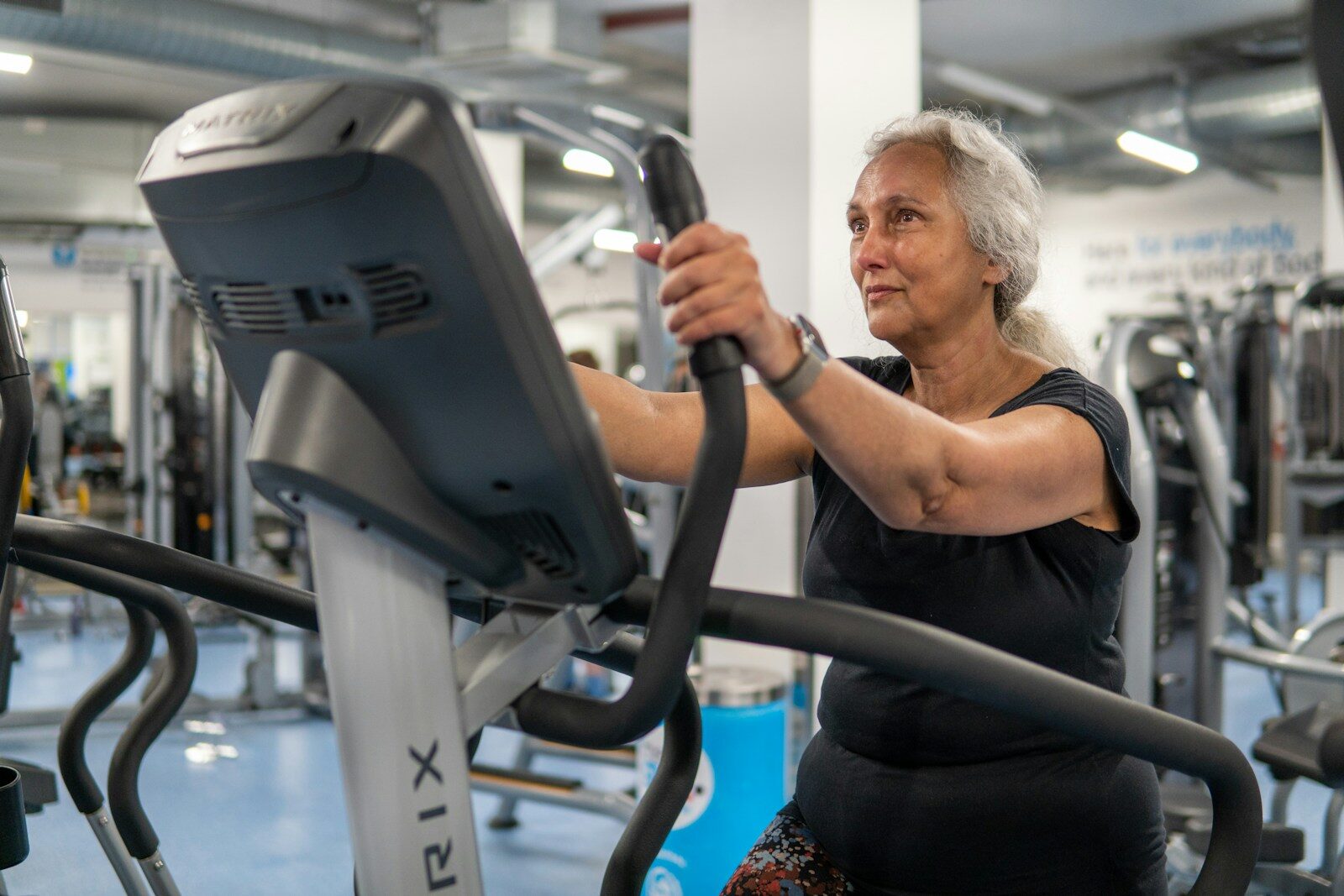
Home-based cardio, using a stationary bike, dance videos, or simple bodyweight circuits, offers convenience and privacy, which appeals to people who feel self-conscious in a gym setting or who have mobility equipment that makes travel a hassle. The drawback is motivation. Without a coach, a class time, or a workout partner, home routines are easier to skip. Gym-based exercise provides equipment variety and staff supervision, useful for anyone new to cardio machines, but membership costs and travel time can be real barriers, particularly for those who no longer drive.
Outdoor activity, whether a neighborhood walk or a bike path ride, tends to combine low cost with genuine mental health benefit, since sunlight and fresh air support mood in ways indoor workouts do not always replicate. The tradeoff is weather dependency and the need for accessible, well-maintained paths, which not every neighborhood offers. None of these three settings is inherently superior. The right choice depends on someone’s transportation situation, budget, and how much they value social interaction versus flexibility.
| Statistic | Figure |
| Older adults meeting federal activity guidelines (2022) | 13.9% overall; 6.2% among those 85+ |
| Recommended weekly aerobic activity for seniors | 150 minutes moderate or 75 minutes vigorous intensity |
| Dementia risk reduction from higher physical activity | 40% lower risk vs. lowest activity levels |
| Blood pressure benefit from aerobic exercise in adults 60+ | Lower blood pressure and resting heart rate |
| Projected U.S. population aged 65+ by 2051 | Rising steadily from over 54 million in 2021 |
Getting Started Safely: Guidelines, Medical Clearance, and Building Habits
According to CDC, adults 65 and older should aim for at least 150 minutes of moderate-intensity aerobic activity each week, such as brisk walking, combined with muscle-strengthening activities on two or more days per week and balance exercises. That guideline is a helpful benchmark, but it is not a starting line. Anyone with an existing heart condition, recent surgery, or a chronic illness should get medical clearance before beginning a new cardio routine, and even healthy older adults benefit from a conversation with their doctor about which approach fits their current condition.
Building a sustainable habit usually matters more than hitting an exact minute count in the first few weeks. Choosing one approach, whether that is a pool class, a daily walk, or a stationary bike session, and repeating it consistently tends to produce better long-term results than switching methods every few days looking for the ideal one. The research backing this consistency is compelling on its own. Higher lifetime physical activity has been linked to a 40 percent lower dementia risk compared to the least active groups, and regular aerobic exercise has also been shown to lower blood pressure and resting heart rate in adults over 60. Those benefits accumulate slowly, which is exactly why the right approach is the one a person will actually keep doing.