
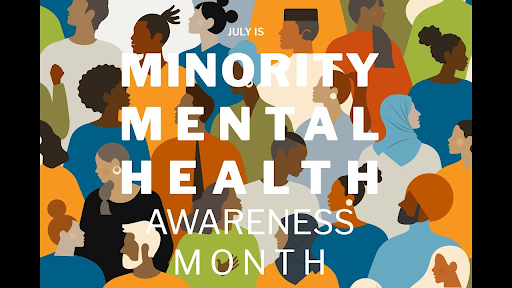
Every July, clinicians and advocates draw fresh attention to a problem that national data has documented for decades. People of color in the United States remain far less likely than white Americans to receive mental health treatment, even when they report symptoms at similar rates. The observance known as Bebe Moore Campbell National Minority Mental Health Awareness Month was created to confront that gap, and it has become an annual prompt to examine why quality care still fails to reach so many communities. Online therapy has entered that conversation as one avenue for reaching people whom the traditional system has long overlooked, and platforms such as BetterHelp have positioned their model around the barriers the month was designed to spotlight.
A Month Built Around an Access Problem
The awareness month honors Bebe Moore Campbell, the author, journalist, and advocate who co-founded NAMI Urban Los Angeles and spent years pressing for culturally informed care in Black and other underrepresented communities. Congress designated July in her name in 2008, aiming to improve access to treatment and raise public awareness of mental illness among underserved groups. Her advocacy grew from personal experience supporting a family member through a system that offered few resources, reflecting her community’s cultural context.
The disparities that motivated Campbell persist today. Reports of mental illness are often lower among Black, Hispanic, and Asian adults than among white adults, yet researchers attribute much of that gap to underdiagnosis and structural obstacles rather than to better mental health. Cost, provider shortages, limited transportation, and a scarcity of culturally responsive clinicians all shape who ultimately gets help. The month asks a pointed question: when symptoms are roughly equal across groups, why is treatment so unequal?
Where the Gap Is Widest
Treatment rates tell a stark story. An analysis of national survey data found that among adults reporting moderate or severe symptoms of anxiety or depression, 53% of Black adults and 40% of Hispanic adults went without treatment, compared with 36% of white adults. Even those who pursue care encounter added friction. In a 2023 survey, Black and Asian adults were more likely than white adults to report difficulty finding a provider who understood their background and experiences.
Part of the problem is who becomes a therapist in the first place. The psychology workforce remains roughly 83% white, according to the American Psychological Association, a composition far less diverse than the population it serves. That mismatch can leave clients searching for someone who grasps their cultural, religious, or generational context, and it can discourage people from starting therapy at all. Language differences and long waits for the few available specialists tend to compound the strain in many neighborhoods, where a single clinician may serve thousands of residents.
How Online Platforms Widen the Pool
Digital services address one root of the shortage by removing geography from the equation. Rather than choosing among the handful of clinicians within driving distance, a client can be matched with a clinician from a national roster. Online therapy through BetterHelp draws on a network of more than 30,000 licensed therapists globally, including psychologists, marriage and family therapists, clinical social workers, and professional counselors. A larger pool gives the matching system more room to honor what a client actually asks for.
That flexibility matters for cultural fit. When people sign up, they can note preferences on therapist gender, age, cultural background, religious or spiritual orientation, and experience with LGBTQ+ affirming practice. In 2024, BetterHelp reported fulfilling client preferences 93% of the time, and it accommodated requests for a therapist of a specific race or religion more than 85% of the time. Clients who feel their match is not right can move to another therapist without a fee, which lowers a barrier that often ends therapy before it truly begins.
Cost, Flexibility, and Communication
Money remains one of the most cited reasons people skip care, and it can fall hardest on communities with lower median incomes and thinner insurance coverage. BetterHelp operates on a weekly subscription that runs from $70 to $100, with pricing shaped by location, preferences, therapist availability, and any discounts that may apply. The service accepts HSA and FSA funds and offers financial assistance to those who qualify, options that can bring the effective cost below that of many in-person practices.
Flexibility extends to how sessions happen. Clients can meet by video, phone, or live chat, and can exchange asynchronous messages with their therapist between appointments. That range suits people juggling shift work, caregiving, or limited transportation, groups that traditional office hours rarely serve well. The platform has also worked to reach beyond paying subscribers. In 2024, it donated the equivalent of $14 million in therapy services through partnerships with over 100 nonprofits, extending support to communities that standard subscription models often miss.
What the Outcomes Data Shows
Access means little without results, and the platform’s tracking offers some measure of both. According to BetterHelp’s 2024 quality and outcomes report, 72% of clients experienced a reduction in symptoms within their first 12 weeks, with progress measured through standardized assessments such as the PHQ-9 and GAD-7. Live sessions earned an average rating of 4.9 out of 5 across more than 1.7 million ratings, and 82% of clients said they would recommend their therapist.
The reach is notable among first-time help seekers. Roughly 40% of new members in 2024 had never been in therapy before, a sign that lower-friction formats can draw people the traditional system seldom reached. Having served more than 5 million people across over 100 countries, therapists working with the platform meet the same licensure and experience standards as those in office settings, including at least 1,000 hours of clinical practice. Dr. Paul Deutsch, a licensed professional counselor on the platform, has noted that clients “consistently praise the ease and effectiveness of therapy” throughout their journey.
Where Online Therapy Fits
For all its reach, online therapy is not a universal fix. It tends to work best as a complement to the broader system rather than a replacement, and some clinical or personal situations still call for in-person care. People experiencing a mental health crisis or needing immediate, hands-on intervention should seek emergency services or a local provider rather than rely on a scheduled virtual session.
The model nonetheless speaks directly to the barriers that Minority Mental Health Month was created to highlight. A larger and more varied pool of therapists, matching that weighs cultural fit, predictable pricing, and formats that bend around real life, all chip away at obstacles that have kept quality care out of reach for generations. The awareness month is a reminder of how far the system still has to travel, and platforms that widen the door represent one practical step toward narrowing a gap that has persisted far too long.